
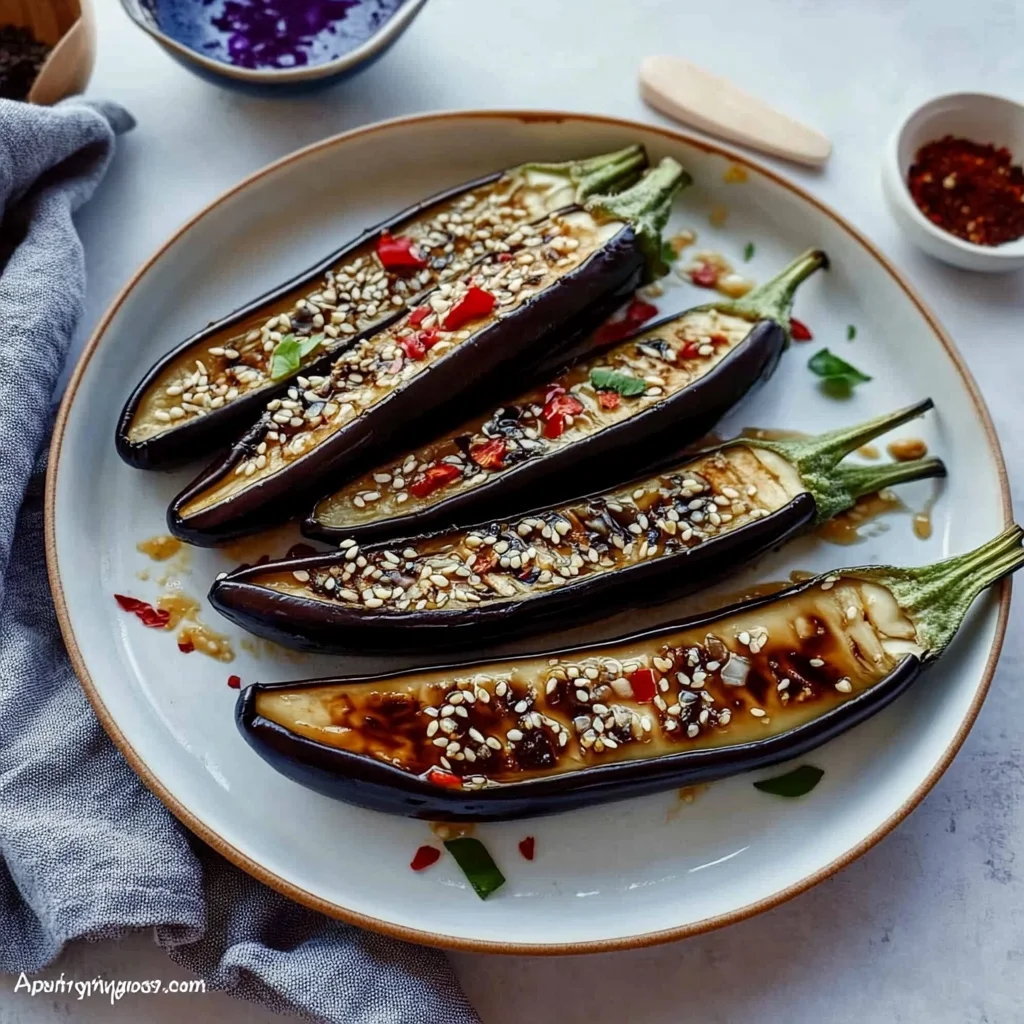
This Japanese eggplant recipe features tender, roasted eggplants glazed with a rich miso mixture. The savory aroma fills your kitchen, promising a comforting meal.

You’ll find this dish easy to prepare and adaptable to your taste. Follow the steps, and you’ll have a delicious side or main dish in no time.
The “Why” Behind This Recipe
This japanese eggplant recipe works beautifully because the combination of roasting and the miso glaze creates a perfect balance of sweetness and umami. The high heat caramelizes the glaze, enhancing the eggplant’s natural flavor while keeping it tender. This method ensures every bite is satisfying and full of depth, making it a delightful dish.
Now that you understand why this recipe shines, let’s explore some variations you might enjoy!
Quick Win (Do This First)
- To enhance the flavor of your Japanese eggplant recipe, sprinkle the sliced eggplants with salt and let them sit for about 10 minutes before brushing with olive oil.
- This step helps draw out excess moisture, resulting in a firmer texture and richer taste after baking.
Now that we’ve set the stage for perfect eggplants, let’s explore how to make that delicious miso glaze.
Essential Ingredients
To create a delicious Japanese eggplant dish, gather the following essential ingredients.
- Japanese eggplants: Use 2 medium-sized eggplants, sliced in half lengthwise for optimal cooking and flavor absorption.
- Olive oil: A tablespoon is needed for brushing; it helps with caramelization and enhances the taste of the eggplant.
- Salt: Just a 1/4 teaspoon to taste, this will elevate the natural flavors of the eggplant.
- White miso paste: Three tablespoons provide a mild yet rich umami flavor; choose high-quality miso for the best results.
- Mirin: One tablespoon adds sweetness and depth; find authentic mirin for an authentic taste.
- Soy sauce: A tablespoon contributes savory umami; low-sodium options can help control salt levels.
- Sesame oil: One teaspoon gives a nutty aroma and enhances the overall flavor profile of the dish.
- Honey (or maple syrup): Use one tablespoon to add sweetness; maple syrup is a great vegan alternative.
- Rice vinegar: One teaspoon balances out the flavors, cutting through the richness of the glaze.
- Toasted sesame seeds: One tablespoon for garnish adds a delightful crunch and visual appeal.
- Green onions: Two stalks, thinly sliced, provide freshness and a pop of color as a final garnish.
Step-by-Step (No Stress)
Start by preheating your oven to 400°F (200°C). This temperature will help the eggplant cook evenly and become tender, enhancing its natural sweetness.
Slice the Japanese eggplants in half lengthwise, allowing the glaze to seep into the flesh. The exposed surface provides a perfect canvas for flavor as they roast.
Next, brush the cut sides of the eggplants with olive oil and sprinkle lightly with salt. The oil will promote caramelization, while the salt enhances the overall taste, creating a savory balance.
Arrange the eggplants cut-side up on a parchment-lined baking sheet. This setup ensures they cook evenly and makes cleanup a breeze after you’re done.
In a mixing bowl, combine white miso paste, mirin, soy sauce, sesame oil, honey, and rice vinegar. Whisk until smooth; this rich glaze will give your eggplant an inviting aroma as it bakes.
Generously spoon the miso glaze over the cut surfaces of the eggplants. Bake them for 15-20 minutes until tender and bubbling—your kitchen will fill with an enticing scent that signals they’re nearly done.
After removing them from the oven, allow a few minutes for cooling before garnishing with toasted sesame seeds and sliced green onions. This adds a lovely crunch and freshness to your dish.
Once you’ve prepared your beautifully glazed eggplant, consider how delicious it pairs with rice or other sides for a satisfying meal.
If It Looks Wrong, Here’s the Fix
- If your eggplants seem a bit too firm after baking, just pop them back in the oven for an additional 5 minutes to achieve that tender texture.
- If the miso glaze isn’t caramelizing as expected, you can broil the eggplants for a minute or two at the end—just keep a close eye to prevent burning.
- Remember, every oven is different, and adjustments are perfectly okay!
As you prepare to garnish your beautifully baked Japanese eggplant, let’s explore some serving suggestions that complement this dish perfectly.
Budget & Time Tips
To save time while making this Japanese eggplant recipe, consider prepping the miso glaze in advance and storing it in the refrigerator for up to a week. You can also double the batch of eggplants and freeze half after baking for an easy weeknight meal. Using leftover miso glaze on other vegetables can help avoid waste while adding flavor to your meals. With these tips, you can streamline your cooking experience and enjoy delicious eggplant dishes more often. Next, let’s explore some serving suggestions that elevate this dish even further.
Make-Ahead, Storage & Reheat
You can prepare the miso glaze a day in advance and store it in the refrigerator. Once baked, leftover Japanese eggplant can be refrigerated for up to three days. To reheat, place the eggplant in a preheated oven at 350°F (175°C) for about 10 minutes, which helps maintain its texture and flavor. This dish is perfect for enjoying later or serving to guests. Transitioning from preparation to plating, let’s explore how to enhance your presentation.
FAQ
How long does it take to prepare the Japanese eggplant recipe?
Preparation takes about 10 minutes, and baking requires an additional 15-20 minutes.
Can I substitute the white miso paste in this recipe?
Yes, you can use yellow miso paste for a stronger flavor or tahini for a different twist.
What texture should the eggplants have after baking?
They should be tender with a slightly caramelized surface from the miso glaze.
How should I store leftover baked Japanese eggplant?
Store leftovers in an airtight container in the refrigerator for up to three days.
Can I make this recipe vegan-friendly?
Absolutely! Substitute honey with maple syrup to keep it entirely plant-based.
As you explore these details, let’s move on to some serving suggestions that enhance your meal.
Miso Glazed Japanese Eggplant
Ingredients
For the Eggplant
- 2 medium Japanese eggplants sliced in half lengthwise
- 1 tablespoon olive oil for brushing
- 1/4 teaspoon salt to taste
For the Miso Glaze
- 3 tablespoons white miso paste for a milder flavor
- 1 tablespoon mirin Japanese sweet rice wine
- 1 tablespoon soy sauce for umami flavor
- 1 teaspoon sesame oil for a nutty aroma
- 1 tablespoon honey or maple syrup for vegan option
- 1 teaspoon rice vinegar to balance flavors
For Garnish
- 1 tablespoon sesame seeds toasted, for topping
- 2 stalks green onions thinly sliced, for garnish
Instructions
Prepare the Eggplant
- Preheat your oven to 400°F (200°C). This ensures even cooking and helps the eggplant become tender.
- Slice the Japanese eggplants in half lengthwise. This allows the glaze to penetrate the flesh and cook evenly.
- Brush the cut sides of the eggplants with olive oil and sprinkle with salt. The oil helps to caramelize the eggplant and adds flavor.
- Place the eggplants cut-side up on a baking sheet lined with parchment paper.
Make the Miso Glaze
- In a mixing bowl, combine the white miso paste, mirin, soy sauce, sesame oil, honey, and rice vinegar.
- Whisk the ingredients together until smooth. This creates a cohesive glaze that will coat the eggplant.
Bake the Eggplant
- Spoon the miso glaze generously over the cut sides of the eggplants. Make sure to cover them well for maximum flavor.
- Bake in the preheated oven for 15-20 minutes, or until the eggplants are tender and the glaze is bubbling. The high heat caramelizes the sugars in the glaze, creating a delicious crust.
Serve
- Once cooked, remove the eggplants from the oven and let them cool for a few minutes.
- Sprinkle with toasted sesame seeds and sliced green onions for garnish. This adds texture and freshness.
- Serve warm as a side dish or over rice for a complete meal.
Notes
Nutrition